Anti-Cryptojacking Detection Systems (ACDS): Safeguarding Against Covert Cryptocurrency Mining
Keywords:
Cryptojacking, Script Injection, Cryptocurrency, Malware DetectionAbstract
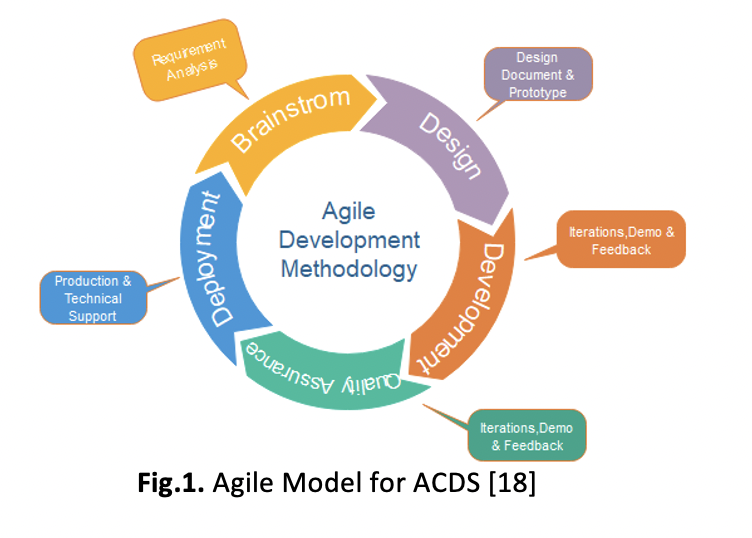
Cryptojacking is a form of cybercrime where attackers secretly use victims' devices to mine cryptocurrencies without their knowledge. It involves embedding malicious scripts in computers, smartphones, or servers to mine for digital money like Monero. The motive behind cryptojacking is profit, exploiting victims' resources while remaining hidden. Cryptojacking attacks has greatly impacted business organizations as mining involves solving highly complex mathematical problems which require immense computational power and browser applications are mainly targeted to conduct the mining. In addition, the damage that can cause to business organizations is uncharitable, it may disrupt business services to run accordingly, loss of reputation and most importantly time and cost needed for the invasion while user will have to sacrifices their computing power for hacker’s financial gain. Preventive measures include monitoring device resources, using browser extensions to block mining, updating software, and blocking known cryptojacking sites. To prevent cryptojacking, individuals and organizations can use and maintain appropriate systems. Thus, this paper introduced Anti-Cryptojacking Detection Systems (ACDS) which is developed using Python programming. The ACDS uses a web crawler built with the LXML library in Python. This library processes XML and HTML. The web crawler accesses a targeted webpage and retrieves all its HTML code without rendering the webpage. The ACDS result classified the type of cryptojacking and the level of conditions of the cryptojacking and all results from ACDS can be exported into csv file. In conclusion, ACDS can detect webpages that use any type of cryptojacking and are capable of detecting six different types of crypto mining services running on the webpage. In future work, it suggested having GUI interface for ACDS.Downloads
Download data is not yet available.
Downloads
Published
2025-12-12
How to Cite
Sabri, N. ‘Afifah ., Muslim, N. ., Khamis, S. ., Zainudin, Z. ., & Jamil, N. S. . (2025). Anti-Cryptojacking Detection Systems (ACDS): Safeguarding Against Covert Cryptocurrency Mining. Journal of Advanced Research Design, 135(1), 264–274. Retrieved from https://www.akademiabaru.com/submit/index.php/ard/article/view/6802
Issue
Section
Articles